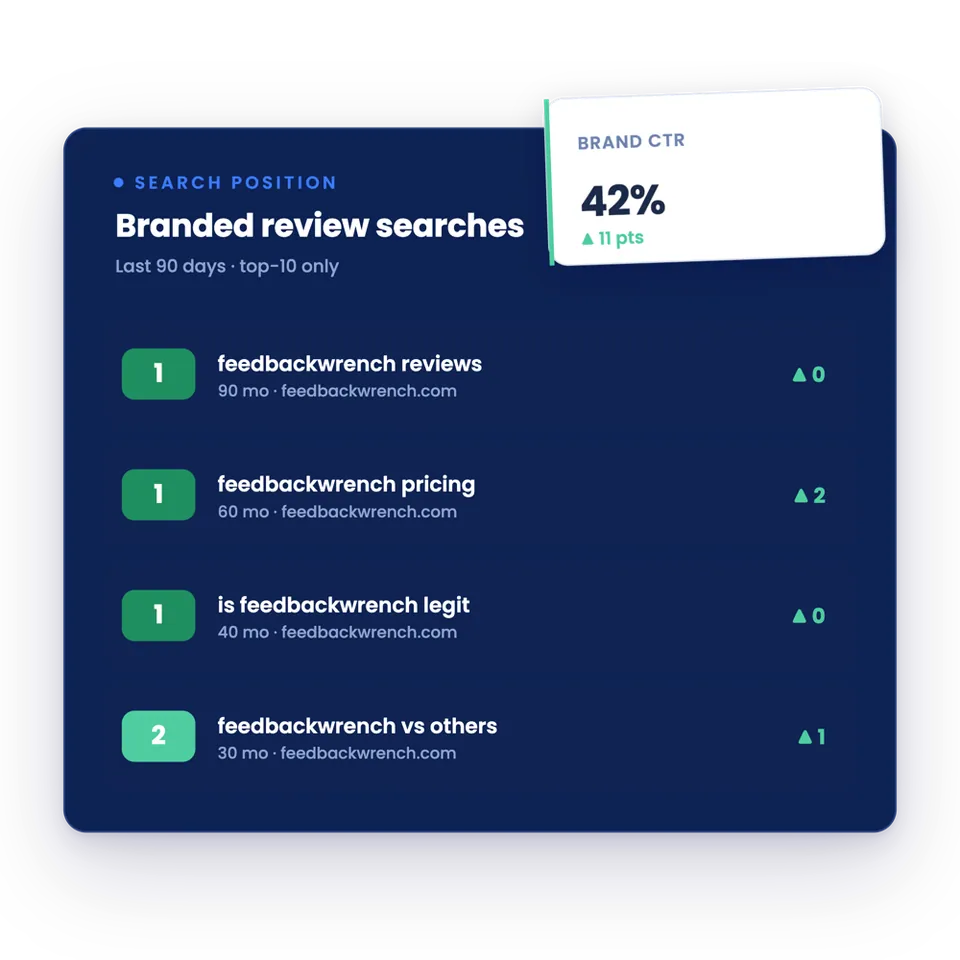
When an owner asks an AI who to hire, it starts with your website, your Google profile, your reviews and your videos. So you set little booby traps for the questions owners ask, build the pages that catch them, and keep prospecting while the long game plays out.
 3:12Video almost liveBooby Traps, Location Pages and AEO
This is module 9, lesson 83 of the accounting course for accountants and bookkeepers. In it you will learn five things.
- What an AI actually reads when it answers about you
- How to set little booby traps for owners with questions
- The pages to build
- What to do Monday morning
- How to set your expectations on timing
What an AI actually reads
AEO means answer engine optimization. It's the practice of making your firm easy for AI tools and search engines to understand and recommend. As of November 2026, these are the main places they look, though the exact mix can change.
- Your website. An AI starts here, so say plainly what you do.
- Your Google Business Profile. Keep it complete and current.
- Your reviews. Reviews are the one thing it can't fake.
- Your YouTube. Your videos are working for you there.
- Your social posts and shorts. Google and Gemini love to surface them, so post the real stuff.
Put it all together, and an owner's question ends at your phone. If your site is vague, your profile is half filled out and your reviews are thin, an AI has little to work with. If all four are clear, you become an easy name to recommend.
Booby traps
A booby trap is a small piece of helpful content, placed where an owner with a question will run into it. The name is a little playful. The idea is serious. Little traps everywhere add up, and each one is a chance to catch an owner.
There are three steps, and then you repeat them.
- Find the questions owners in your niche ask. Steal the list from whoever already ranks for them. Look at what shows up when you search those questions yourself.
- Write a better answer. Plain words, the answer up top, a real face behind it, and nothing fluffy.
- Put it where they'll look. A page on your site, a video, a social post.
- Then repeat.
You already know many of the questions. You hear them from clients and prospects every week. How much can I deduct for my truck? When should I switch to an S corp? What happens if I'm behind on my books? Write them down and answer them, one at a time.
The pages to build
Think of your site as a stack.
At the base, your core pages. You need one for each thing you do. Tax planning, bookkeeping, outsourced accounting, whatever your services are. Each gets its own page with a plain explanation.
Next, a page for each town you serve. That way you show up nearby when someone searches near them. A location page should be real. Say what you do for owners in that area, and mention anything genuinely local about how you work.
On top, the answer articles. Those are the little traps that catch real questions. Each one answers a specific thing an owner would type.
That three layer stack gives AI tools and search engines a clear picture. Who you are, what you do, where you do it, and what you know.
What a good answer looks like
A good answer article follows a simple shape.
- A title that matches the question the way an owner would type it
- The answer in the first paragraph, in plain words
- A few short sections that go deeper, with examples where they help
- A real face and name behind it, so it feels human
- A clear next step at the end, like booking a call
Skip the fluff. Skip the throat clearing. If an owner has to scroll past three paragraphs of background to find the answer, they'll leave, and an AI summarizing your page will skip it too.
The mistake to avoid
The common mistake is writing about what you want to say, instead of what owners are actually asking. Seven tax tips nobody asked for won't catch anyone. Answer the question that actually got typed.
A related mistake is writing for other accountants. Industry language, acronyms and technical detail may feel impressive, but owners don't search that way. They search in everyday words, usually describing a problem.
Keep prospecting while it builds
One last rule. SEO and AI visibility are the long game, so don't sit around waiting on them to save you.
Do keep prospecting, running ads and shining the light on your clients while this builds. Don't sit back and wait for search to fill your calendar. It won't, not yet. You're planting seeds. You don't know when they'll pop, so start planting.
This is a good mindset for the whole course. No single channel carries your pipeline alone. Phone calls and texts bring meetings now. Ads bring attention now. Client spotlights build trust. And search and AI slowly add a layer that works even when you're asleep.
A made-up example
Imagine a bookkeeper serving contractors. She writes down the questions contractors ask her most often, such as how to keep job costs straight or what to do when the books are a mess at year end. She picks one, searches it, and looks at what ranks. She writes a plain, clear answer with the key point in the first paragraph and her face on the page. She does the same for the next question the following week.
Over time she has a small library of answers. She also has a page for each town she serves, and a complete Google Business Profile. None of that is magic, and it may take a while. But each piece is a trap that stays set. That's an example of the approach, not a promise about timing or rankings.
Your Monday morning
Monday morning, write down the questions owners keep asking you. You already know them.
- Search those questions, and look at who ranks. That's the list you're going to beat, one answer at a time.
- Write one better answer, in plain words, with the answer in the first paragraph.
- Then open your Google Business Profile and make sure it's complete and current.
That's your whole Monday. Small and doable.
A quick profile checklist
When you open your Google Business Profile, check a few basics.
- Is your business name, address and phone number correct?
- Are your services listed in plain words?
- Is your description clear about who you help?
- Do you have photos, ideally real ones of you and your work?
- Are you responding to reviews?
An AI and a human visitor both read the same profile. If it looks tidy and alive, both are more likely to trust you.
Quick recap. AI answers from your site, your Google profile, your reviews and your videos. Find the questions, write a better answer, and put it where owners look. Build your core service pages, and a page for every town you serve. And remember, search is the long game, so keep prospecting and promoting your clients meanwhile.
Next up, how to get people referring you, and how to reward it.
Want me to look at how you show up in search and AI answers?
If you'd like me to look at how you show up in search and in AI answers, book the $99 audit call. I'll tell you what I'd fix first. If nothing's broken, I'll tell you that you don't need us. Book it at https://www.feedbackwrench.com/book
Questions people ask
What does an AI read when it answers about my accounting firm?
As of November 2026, it starts with your website, so say plainly what you do. It also reads your Google Business Profile, your reviews, your YouTube videos, and social posts and shorts. Keep each one complete, current and real.
What are booby traps in content marketing?
They're little pieces of helpful content set wherever owners in your niche ask questions. Each one is a chance to catch an owner who is searching. Find the questions, write a better answer, put it where they'll look, and repeat.
What pages should an accounting firm build for search?
Start with core pages, one for each thing you do. Add a page for each town you serve, so you show up nearby when someone searches near them. Then add answer articles that catch real questions.
What is the biggest mistake in writing content for search?
Writing about what you want to say instead of what owners are actually asking. Seven tax tips nobody asked for won't catch anyone. Answer the question that actually got typed.
Should I wait for SEO to bring in clients?
No. SEO and AI visibility are the long game. Keep prospecting, running ads and shining the light on your clients while this builds. You're planting seeds, and you don't know when they'll pop.

Rob built Feedbackwrench and Nuance Financial Tax & Accounting. Since 2015, our team has helped transform 550+ small businesses with marketing, strategy and systems.