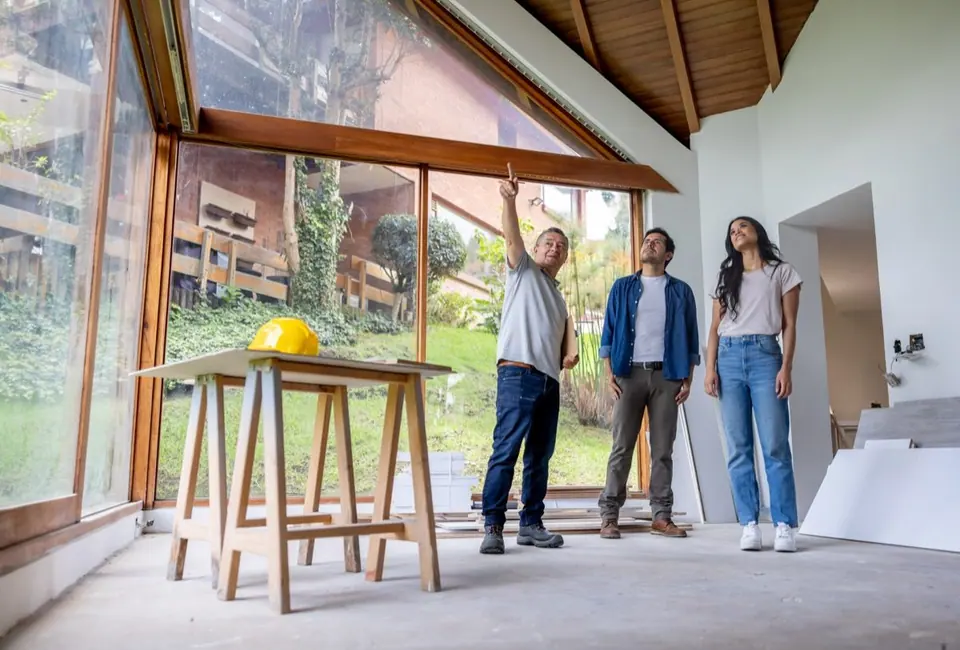
AI can write a thousand fake kitchen pages. It can't fake your jobsite. So show the real work, with project pages, reviews and video, because that's what buyers and AI tools lean on when everything else looks the same.
 0:40Watch the videoAI Can't Fake Your Jobsite: Real Proof Beats Fake Pages
The web is filling up with sameness
Search for a remodeler in almost any town and you'll find pages that read alike. Same stock photo of a smiling couple. Same promise about quality and craftsmanship. A lot of it was written in seconds.
That's the problem and the opportunity. When words are cheap, proof gets valuable. A buyer looking at their own kitchen wants to see somebody else's kitchen that you actually built. An AI tool trying to decide who to recommend looks for signs that a business really does the work.
Your jobsites are the one thing nobody else can copy.
Three kinds of real proof
1. Project pages with before, during and after photos from the same job. One job, one page. Show the room before you touched it. Show it with the walls open or the framing up. Show the finished space. The "during" shots matter more than most owners think, because they show process, and process is what makes a price feel earned.
Say what the homeowner wanted, what you found, what you did, and the town. Keep it plain.
2. Real reviews that name the job and the town in the text. A review that says "great team" is nice. A review that says "they redid our kitchen in Edina and kept the dust out of the rest of the house" is useful. It tells a buyer and a tool what you do and where. You can't write that for the customer, but you can ask in a way that invites detail. A simple prompt like "what did we do for you, and what was it like?" does it.
3. Real video of your crew and the finished room. Thirty seconds on a phone is fine. The crew lead walking the finished room. The homeowner saying what they like. A quick look at the work in progress. Video is hard to fake and easy to trust.
Every finished job becomes another page
This is the part I like best. Proof isn't a one-time project. Every job you finish gives you photos, a story and often a review. If you build the habit, each project becomes one more page on your site that no competitor can match.
A simple routine works well.
- Before the job starts, ask the homeowner if you can photograph the work and use it on your site. Get it in writing.
- Take a before shot on day one, a few during shots, and the after shot when it's clean.
- When the job wraps, ask for the review the same day.
- Within a few days after, write the page. Plain description, photos, town, review.
- Link it from the matching service page and town page.
Do that every time and in a year you've got a real library.
What we won't do
We don't make fake content for clients. No invented testimonials, no stock photos passed off as your work, no made-up before and afters. It's bad for the buyer, it's risky for you, and it doesn't work for long anyway. If a client doesn't have a real story yet, we leave that beat out and say the plain problem and the plain fix.
A worked example
Say you're a remodeler who does kitchens and baths. You finish a kitchen. You've got before photos from the walkthrough, a handful from the demo and framing, and the finished space. The homeowner is happy and leaves a review that mentions the kitchen and the town. You record a short clip of the crew lead walking the room.
You build one page. It has the photos in order, a few plain paragraphs, the review, and the clip. You link it from your kitchen remodeling page and your page for that town.
That's one page. Do it again with the next job. The jobs that look the same on a competitor's site look different on yours, because yours are real.
The mistake to avoid
The mistake is stock photos. A beautiful kitchen that isn't yours tells buyers and AI tools nothing about you. Use your own, even if they're not perfect. Real and a little rough beats polished and fake.
The second mistake is skipping permission. Get the homeowner's OK before you use their photos or their words. Always.
Monday morning checklist
- Pick your three best finished jobs from the last year.
- Find the before and after photos for each.
- Ask each homeowner for permission, and for a review if you don't have one.
- Build one project page for the best job. Photos, description, town, review.
- Add a rule for your crew. Before, during and after photos on every job.
- Shoot one short phone video of a finished room.
Want to see how your real work shows up?
Book the $99 audit call. It's one live call. I'll look at how your real work shows up on your site and in search, and I'll show you what I'd do to grow profitably. You get your top three fixes. And if nothing's broken, I'll say so.
Questions people ask
Why does real proof matter more now that AI can write content?
When anyone can generate a page, a page alone proves nothing. Real photos from a real job, reviews that name the job and the town, and video of your actual crew are things a fake page can't copy. Buyers and AI tools both lean on that kind of proof.
What should a good project page include?
Before, during and after photos from the same job, a short plain description of what the homeowner wanted and what you did, the town, and a review if you have one. Keep it factual and specific.
How do I get reviews that help my pages?
Ask every customer the day the job wraps, and let them write in their own words. A review that mentions the job and the town does more work than one that only says great service. Never script or pay for reviews.
Does video really matter for a remodeler?
Video of your crew and the finished room shows buyers who they're inviting into their home. It's hard to fake and easy to trust. Short clips shot on a phone are enough to start.
Do you make content for clients that isn't real?
No. We don't make fake content for clients. Every page we help build is based on real work, real reviews and real photos.

Rob built Feedbackwrench and Nuance Financial Tax & Accounting. Since 2015, our team has helped transform 550+ small businesses with marketing, strategy and systems.